How choosing the right filter can drastically reduce your energy costs
Eurovent data shows: Modern filters pay for themselves faster than you might think.
Energy prices are rising—and building operators feel this most acutely when it comes to ventilation systems. What may come as a surprise to many is that filters alone account for up to 30% of a ventilation system’s total operating costs.
The reason is simple: Every filter creates a pressure drop that the fan has to work against. Just 1 Pascal more means about 1 € in additional energy costs per filter per year. With higher energy prices, it’s significantly more.
This means: An inefficient filter can cause over 100 € in additional costs per unit annually.
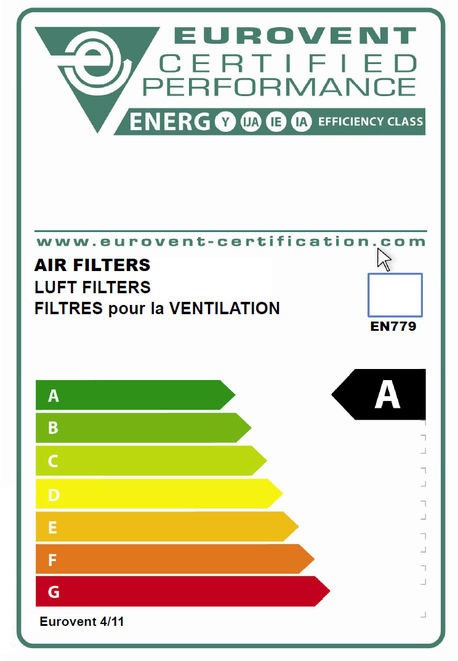
Eurovent provides transparency
To make comparisons easier, Eurovent classifies all common air filters according to their energy consumption—from A+ (very efficient) to E (very inefficient).
This classification is based on realistic tests that take into account not only the initial pressure drop but also the filter’s performance as it becomes clogged with dust. This data enables a fair, objective comparison of different filter types.
Click here for our detailed case study and all filter comparisons:
Get in touch with us — our team will be happy to assist you.
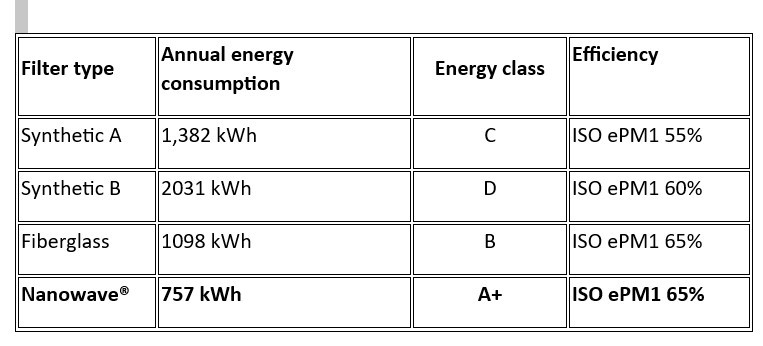
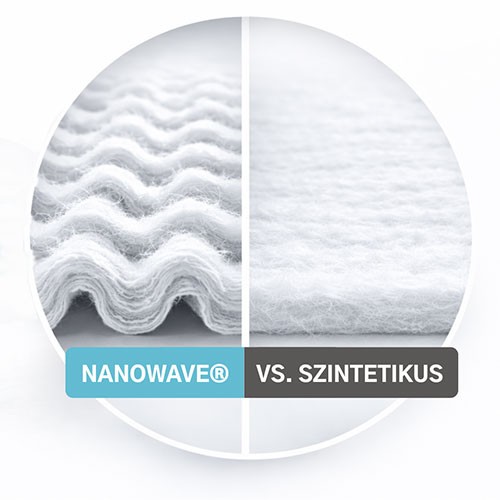
Nanowave®: How modern filter technology saves costs
The Eurovent data evaluated in our detailed document (link) clearly shows:
1. Modern filter media require less energy
Example: F7 bag filter (standard size, 10 bags)
Savings compared to Synthetic B: over 60 % of energy consumption!
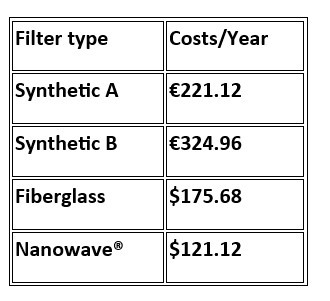
2. The cost savings are impressive
In the detailed technical case study, we prepared a comparative consumption and cost analysis for the most common materials and filter types. We calculated the base electricity rate at € 0.16 per kWh, and in summary, this leads to the following result:
Simply by switching to Nanowave® filters, you can save up to 200 € per filter per year — and enjoy improved air quality thanks to more efficient filters.
Short vs. compact: filter length is also an often-overlooked cost factor
The costs become particularly high when short-pocket filters are used. Their initial pressure drop is up to 70 to 90 % higher than that of standard products with long pockets, which significantly increases operating costs.
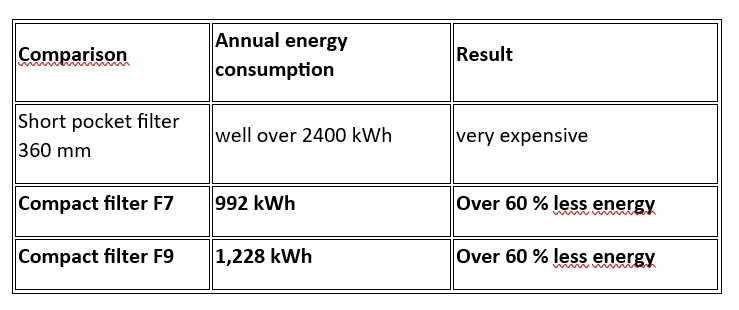
Eurovent data shows particularly significant savings potential here:
Switching to compact filters can therefore more than halve energy consumption and thus costs.
Conclusion: Efficient filters pay for themselves very quickly
While modern filter technologies — especially Nanowave® and high-quality compact filters — have higher upfront costs, the annual savings in operation far exceed the price difference.
So if you want to cut costs, you don’t necessarily need to look at major system upgrades — often, simply replacing the filter is enough.
This makes air filters one of the fastest, simplest, and most effective measures for saving energy in buildings.